go see Mr. Fox

Yesterday I saw Wes Anderson’s new film, The Fantastic Mr. Fox, with some friends.  I’ve long harbored the usual discomforts about Anderson’s work: too stylized, too “twee,” addicted to sentiment and yet prone to cheat by holding it slightly away with a patina of irony, obsessed with the boring inner lives of wealthy-ish people, overly reliant on soundtracks for emotional push.  But it turns out some of these habits–especially the formal, stylistic ones–are well-suited to an adaptation of one of the best childrens’ novels of the past century.

Like the original Dahl text, Anderson’s Mr. Fox is a lush, sweet-tempered, comic, and more than slightly eerie work;  it will probably remind you of other stories that hover between childhood wonder and adult anxiety (e.g. Jim Henson movies, the Narnia books, William Blake’s short poems).  Above all it is a moral tale, about family, friendships, the nature of resentment and revenge.  Anderson’s previous work also deals with those themes, but Mr. Fox seems more comfortable with and honest about them.

If you can pry yourself away from your video phone, go see it.  And if you have any offspring and can also separate them from whatever digital entertainment, bring them along.  Although they probably won’t “get it,” they will delight in things like the expression on a half-sentient opposum’s face and the texture of Mr. Fox’s corduroy suit and every color in the whole movie.

-TGR

Gucci is a good look for Christmas

. . . as my boy says.   The new Gucci Mane album, The State vs. Radric Davis, is out today.  It is really good.  I mean, really good, unless you dislike bass, synthesizers, New Order, the Magnetic Fields, parties, or drugs (especially drank).  Buy it wherever you buy MP3s.  White folks, get it: ” ’cause Gucci ain’t a racist — / all his diamonds Caucasian.”  Alongside the Dylan x-mas standards album, it will help the holiday season go better.  Which is bitterly ironic, because just before this holiday season got started, Gucci was sentenced to a year in prison for parole violations.

-TGR

new Clipse album just about out

. . . and if you know the right places, Till the Casket Drops has already leaked.  I’ve listened to it a few times since Monday and remain somewhat disappointed.  I didn’t imagine it would equal or top their 2007 classic Hell Hath No Fury (best hip-hop album of the 2000s); honestly, I expected the attempt to re-attain those heights to derail this album.  Not sure if that’s the reason Casket sounds mediocre in most stretches, but, while I certainly don’t think Malice and Pusha have “lost their flow” or whatever, I do find myself hankering for some “Ride Around Shinin” or “Trill” (the late track on Hell Hath that sounds like an early NIN effort).

The album has one true banger–“Eyes on Me,” which will make you a Keri Hilson semi-fan–and a couple of solid solid tracks, all of which are on the first half.  This being Clipse, there are plenty of memorable rhymes (“A far cry from the stash in a rental van, / I’m the reason the hood need a dental plan”), and since the Neptunes produced two-thirds of the songs, the beats are above-average as far as U.S. hip-hop circa 2009 goes.  Still, much of the production is sluggish (if not lazy), and in places the verbal flow is slack, as if the anger that propelled Hell Hath is gone.  As a fan, this bugs me, but I also realize it isn’t necessarily a bad thing that they aren’t as pissed-off as they used to be: it may indicate that, finally, finally, Clipse are having some commercial success in the game.

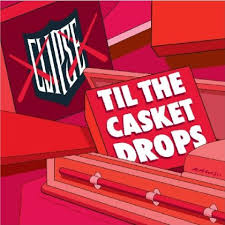
What irks me most is the cover art, which has this lame bubble-gum / cartoon beef color scheme and general Artistically Serious Grafitti aesthetic, sort of like a t-shirt you might get at a boutique in a neighborhood that used to be only partly gentrified.  Happily, I have a tiny iPod Nano and don’t have to look at it much.

So, TGR advice: don’t buy the whole album before you preview the tracks.  You will probably end up keeping only three or four.  But they do bump.

-TGR

PS: Isn’t it amazing that one corner of Virginia–the southeastern Hampton Roads metro sprawl–has produced Timbaland, Clipse, the Neptunes, AND Missy Elliott?

Pollan’s “Botany of Desire” on PBS

PBS has turned one of TGR’s favorite books into a good television documentaryThe Botany of Desire is a compact, lucid eco-cultural history of four plants–the tulip, the potato, the apple, and cannabis–that have been intimate partners in human civilization for the past few thousand years.  You could do the same thing with coffee or chocolate or any other plant humans take pleasure from; really, you could do it with any product that originates in nature (living or not), which is to say everything: the gas you put in your car, for example, wouldn’t exist without tiny prehistoric organisms that very, very slowly became oil.  The charm of Pollan’s approach is that he balances a wonder at nature’s wild fecundity with a careful respect for human inventiveness, which is itself contained within nature (our big-ass brains are essentially a multi-million year response to environmental conditions and stimuli).  And at the center of this is amazement–and a deep unease–at the increasing human ability to manipulate nature to our own ends:

“In the years since Darwin published The Origin of Species, the crisp conceptual line that divided artificial from natural selection has blurred.  Whereas once humankind exerted its will in the relatively small arena of artificial selection (the arena I think of, metaphorically, as a garden) and nature held sway everywhere else, today the force of our presence is felt everywhere.   It has become much harder, in the past century, to tell where the garden leaves off and pure nature begins.  . . . Partly by default, partly by design, all of nature is now in the process of being domesticated–of coming, or finding itself, under the (somewhat leaky) roof of civilization.”

(Botany of Desire, xxii-xxiii)

This has been dealt with more abstrusely by Heidegger, in “The Question Concerning Technology.” (Make sure to read the footnotes.)

Anyway, I watched the PBS version tonight, and it captures the original text quite well, mainly because the show is organized around narrative interviews with Pollan himself.  It is also shot magnificently: lots of close-ups of tulip stipplings and the droplets of resin-goo on marijuana buds.  Hurray for weed!

They will almost certainly replay the documentary soon.  Check the site for listings.  And if you want to read one of the many modern nature poets who are onto the same thing Pollan is, may I suggest the master himself?  Go near the back and dig on “The Bouquet,” then flip a few pages more and try out “The Planet on the Table.”  You will soon be fiending.  Those of you who enjoy the non-fiction side of things, get a copy of Uncommon Ground, the best available collection of recent environmental history writing.  All of the essays in there are well-written and clearly argued; delightful for the academic or the layperson, its theme is the state(s) of nature in modernity.  Plastic flowers in Disneyland, to pink flamingoes, to the fight to preserve the last American wilderness areas, y’all.

-TGR
City Journal rules

If anybody wants to buy me a subscripton ($23/yr) for Christmas, I say go.  I found out about it mainly through Matthew Yglesias, a great blogger with an interest in urban design and landscape architecture.

For now, two good articles from the recent issue.  The first is about E.D. Hirsch and the present fork in the proverbial road of American education.  As a college teacher who is routinely appalled by even his best students’ lack of basic cultural knowledge, I find Hirsch’s emphasis on core curriculum reassuring.  It works, and lately we haven’t been honest about that.  In fact, Hirsch is so smart that I even forgive him for teaching at The Other Place.

The other article, “A Place is Better Than a Plan,” deals with the minor moves and subtleties that are crucial to urban landscaping.

-TGR

food for poetry

If you’ve ever read John Ashbery’s “Grand Galop,” with its nasty close-ups of sloppy joes and related cafeteria goo, or, even better, “Farm Implements and Rutabagas in a Landscape,” a psychedlic jag about cartoon characters (Popeye included) chowing down on canned spinach, you might have sensed that American poets from the post-World War II generation tend to have a queasy relationship with the national cuisine.   If the nature of America (and of American nature) is adumbrated by the state of its food, then nature, for them, was often spooned out of a can and nothing to hunger after.  But in light of this essay by Jerry Weinberger, “America’s Food Revolution,” it looks like something else might be on the plate now.  Get to work, people.

-TGR

PS: Anyone else titillated by the names of 1.) vegetation, 2.) race horses, and 3.) elegant dishes?   There is so much colloquial inventiveness and cosmopolitan syncretism in all of them.  Just flip through a bulb catalog or go to the racetrack sometime.

Harry Potter is for children.

Maybe it’s the rainy, windy, generally raw Southern California weather, maybe I’m in a grey mood, but, regardless of the reason, I am just going to say it: if you are a grown-up who reads the Harry Potter books, you should be embarrassed.  You should be really embarrassed.  There are way too many books–good, bad, great, awful–written for adults out there; nobody over the age of 12 needs to read fantasy novels aimed at children.

Look, Harry Potter is great for kids.  I love to see whipper-snappers crack books instead of fiddling with video-game consoles.  The books in the series are well-written and beguiling and all that (yes, I’ve looked), and their existence will probably create a lot of dedicated new readers.  Bless you, J.K. Rowling.  But once a reader becomes a grown-up, s/he needs to read grown-up books, whether that means Dan Brown or Shakespeare or Keynes or whatever.  Otherwise we continue turning into a nation of children which does things like re-elect George W. Bush.  Ever notice how the HP and W eras coincide?  Coincidence?  I THINK NOT.

-TGR